


Robot Era Evolution
3.213.00 Reviews
App Specs
- Version
- 0.005
- Updated On
- License
- Free
- Downloads
- 50,000+
- Developer
- Bolt Bridge Games
- Categories
- Action
- Platform
- Android
Screenshots
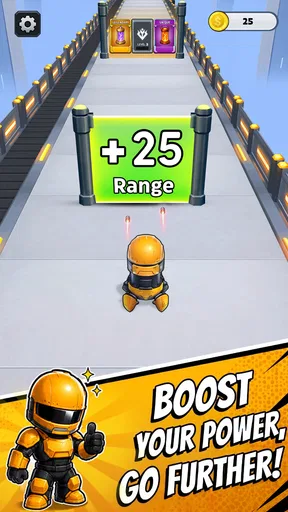
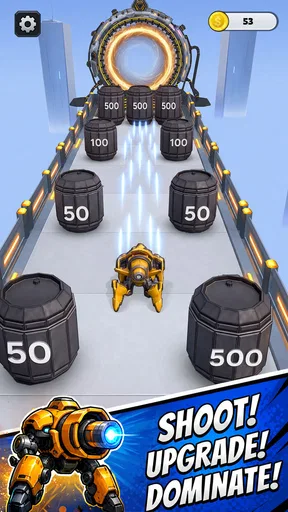
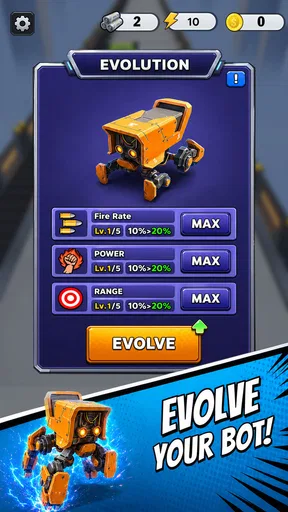
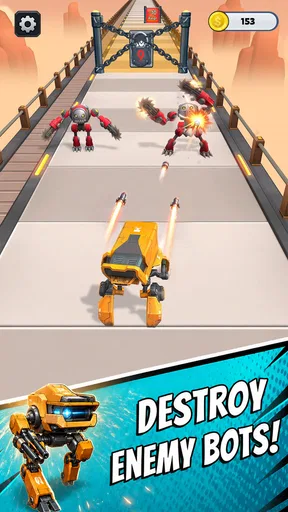
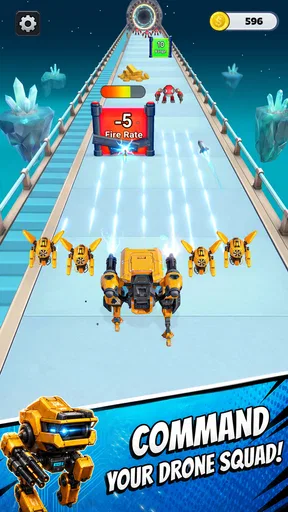
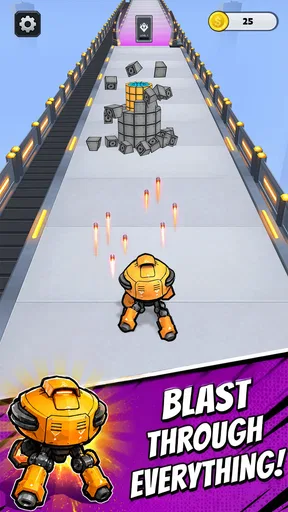
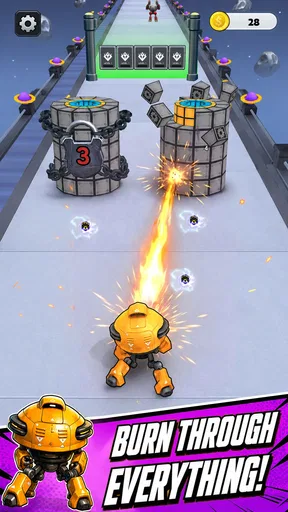
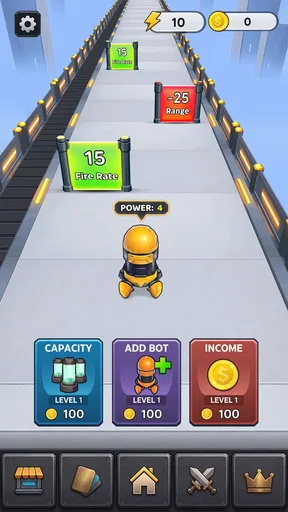
 Analysis by AppCompare
Robot Era Evolution is the kind of action game I can imagine opening for a quick break and then playing longer than planned. Its central idea is easy to understand: I build a robot force, guide it through obstacle-filled stages, and try to turn a modest starting team into something much stronger. That straightforward loop gives the game an immediate identity, but it also means the quality of the moment-to-moment play matters more than a complicated story or a long list of menus.
After spending time with it, I see a promising early-stage experience rather than a fully polished action game. The current version is 0.005, and that number matters because it sets the right expectations. There is a foundation here for players who enjoy gradual improvement, repeated runs, and the satisfaction of watching a small mechanical squad become more capable. At the same time, anyone looking for a deep campaign, highly refined controls, or a large amount of content may find the present build limited.
How the current robot-running loop feels
The most appealing part of the design is the combination of movement and growth. I am not simply steering one character through hazards with no long-term consequence. The run is tied to the larger goal of developing an army, so each attempt feels connected to the next one. That gives ordinary obstacle sections a useful purpose: I am learning how to move more safely while also working toward a stronger setup.
This structure suits short sessions particularly well. If I have a few minutes while waiting for an appointment or taking a break from work, I can focus on a run instead of needing to remember a complicated plot. The action category is a good fit because the game puts its emphasis on active movement and immediate decisions rather than passive collection. I need to pay attention to what is ahead, react to the course, and think about whether a risky path is worth taking.
The robot theme also gives the progression a clearer personality than a generic runner would have. Improving a machine feels connected to the fantasy of evolution: a basic unit is not the final goal, and the appeal comes from building toward something more powerful. The store summary describes that destination as unstoppable power, but in practical terms I would treat that as the motivation behind the loop rather than a promise that every run becomes easy. Obstacles still matter because the game needs some resistance for improvement to feel earned.
One useful way to approach the game is to separate a run into two decisions. First, I decide how safely I can get through the immediate section. Second, I consider whether a more ambitious route or action could produce better long-term progress. That distinction helps prevent the common mistake of treating every moment as a race for maximum reward. When I play too aggressively, a small error can undo the value of an otherwise good attempt.
Why the simple premise works
I like that the premise can be understood without a tutorial-heavy explanation. Build the army, survive the course, and improve the result. That clarity is valuable on a phone because the game does not need to compete with a large amount of reading. It also makes the title approachable for players who enjoy action games but do not want a complex strategy interface before they can begin.
Worth Reading Before You Choose

EA SPORTS FC Mobile 26 Is a Bigger Football Game, but It Takes Time

Flipboard Shows What News Apps Must Do Beyond the Feed

Switching to Android Auto Means Rethinking Your Driving Routine

Google Calendar Makes a Crowded Week Easier to Manage

Ludo King Makes the Most of the Minutes Between Plans

Baby Panda World Brings Quick Play to Modern Phones, but Its Game Library Feels Busy
There is a trade-off, though. Simplicity can become repetition if the obstacle design, progression choices, and run-to-run decisions do not keep changing. In this early version, I would play in shorter bursts rather than expecting an endless evening of variety. The game is more convincing as a compact progression-driven action experience than as a complete replacement for a larger console-style adventure.
Another practical strength is that the concept naturally supports experimentation. I can try a cautious run to understand the course, then attempt a more ambitious one once I know where the danger is likely to appear. That creates a small but meaningful learning cycle. The game does not need to explain every lesson directly; the player can discover which habits produce steadier progress.
What the version and release details tell me
Bolt Bridge Games is presenting a game that is still at a very early point in its development. The release date is July 30, 2026, and the current build is 0.005. I would not read those details as evidence of a finished feature set. Instead, they suggest that the most important question is whether the core robot-running loop is enjoyable enough to make players interested in future refinement.
That early status changes how I judge the experience. I pay more attention to whether the controls are understandable, whether the progression gives each run a reason to matter, and whether the central fantasy is strong enough to support later additions. I am less concerned with comparing it to action games that have had years to accumulate stages, systems, and presentation polish.
For existing players, a move from an early build toward later versions could be significant even if the basic idea stays the same. Small adjustments to obstacle timing, progression balance, interface clarity, or the feel of movement can make repeated runs much more satisfying. I would watch for changes that improve decision-making rather than simply adding more items. A larger inventory or more visual effects would not automatically solve a weak rhythm between risk, failure, and improvement.
The current audience appears to be discovering the game gradually. It has passed 50 thousand installs, while its average rating is 3.2 from 108 ratings and 13 reviews. I see that as a mixed but useful signal: enough people have tried it to create an initial impression, yet the rating is not strong enough for me to recommend it blindly to everyone. I would treat the game as something to sample with realistic expectations, especially because its early version may not represent where the project eventually goes.
The free entry point helps with that decision. I can try the core experience without paying upfront, which is important for a game whose long-term depth is still developing. There are in-app purchases ranging from 29 cents to $9.99 per item, so I would avoid spending immediately. My preference would be to understand how satisfying normal progression feels first, then decide whether any optional purchase genuinely improves my experience rather than merely shortening the learning process.
How early development affects the player experience
Early games often ask the player to tolerate rough edges in exchange for seeing a concept grow. That can be enjoyable if I like discovering potential, but frustrating if I expect a smooth, content-rich product from the first session. Robot Era Evolution belongs more naturally in the first group. Its appeal depends on whether I enjoy the basic act of guiding robots through danger and building toward stronger runs.
I would also keep the age guidance in mind. The game is rated Teen, so it is not presented as a universal children’s title. Parents should make their own decision based on the child and the way the game’s action and progression fit their household. For older players, the rating simply reinforces that this is aimed at a teen-and-up audience rather than being designed specifically for very young users.
Device compatibility is reasonably broad for an Android action game, with Android 8.0 as the minimum operating system. That makes it accessible to people who are not using the newest phone, although compatibility alone does not guarantee identical performance on every device. If I were installing it on an older handset, I would begin with short sessions and check how comfortably the game runs before committing to longer play.
Practical ways I would play and evaluate it
My first recommendation is to use the opening sessions as observation rather than as a test of speed. I would watch the spacing of obstacles, note where I tend to react late, and identify whether collecting or advancing is more valuable in a particular section. This approach turns failure into information. It is especially useful in a game where the long-term goal is to evolve an army rather than simply finish one isolated course.
A second tip is to avoid spending money until the free progression has answered a basic question: do I enjoy repeating the run when the result is imperfect? If the answer is no, a purchase is unlikely to fix the underlying issue. If the answer is yes, then an optional item may feel like a convenience rather than a requirement. Because the available purchase range extends from very small amounts to $9.99, setting a personal limit before playing is a sensible way to keep the experiment controlled.
A third insight is that the game may work better as a routine than as a marathon. I would play a few focused attempts, stop when my reactions become careless, and return later with a clearer head. Obstacle games often punish tired play, and the robot-evolution layer gives me a reason to come back without demanding that I finish everything in one sitting. This also makes the early content feel less repetitive because I am approaching it in manageable pieces.
For a realistic everyday scenario, I could see myself playing during a commute or while waiting for food. I would have enough time for several attempts, but not enough time to start a large role-playing game and become invested in its story. Robot Era Evolution fits that gap because the objective is immediate and the progression gives the session a sense of direction. I would not choose it for a quiet evening when I want a detailed narrative or a demanding competitive match; I would choose it when I want quick action with a light development goal.
Players who enjoy idle games may need to adjust their expectations. The robot theme might suggest that the army grows automatically, but the defining activity is still running through obstacles and making active choices. Conversely, players coming from traditional endless runners may appreciate the added sense of development, while also noticing that the game’s current build may not yet offer the same breadth as established alternatives.
Where it compares well and where alternatives win
Compared with a basic runner that focuses only on distance and high scores, this game has a more motivating reason to replay a stage. The robot army gives progress a visual and thematic direction, so a failed run does not necessarily feel empty. I can think about how the attempt contributes to a stronger future run rather than viewing the result as a number that disappears when I close the app.
Compared with a deeper strategy game, however, the appeal is more immediate and less analytical. I would not choose this when I want extensive unit management, elaborate maps, or a campaign built around long planning sessions. A strategy alternative is better for players who enjoy comparing many systems before acting. This game is better for someone who wants the action to happen first and the improvement decisions to remain easy to grasp.
Established action runners are also likely to feel more polished and varied. Their advantage is usually a mature selection of stages, refined feedback, and a clearer sense of long-term structure. Robot Era Evolution counters that with a more specific mechanical-army identity and the curiosity of seeing how an early project develops. The choice depends on whether I value proven depth or the freshness of a smaller, still-forming idea.
The free model is another point of comparison. It lowers the barrier to trying the game, but the in-app purchase range means I should remain aware of how optional spending fits into progression. I would judge the experience by the quality of the free loop first. A game that remains enjoyable without purchases earns my trust; one that makes me feel pushed toward buying before I understand it would be harder to recommend.
What still needs attention
The main gap is maturity. Version 0.005 communicates that the project is not yet at the stage where I would expect every system to feel fully settled. That may show up as limited variety, uneven pacing, or progression that needs balancing. I am not treating those possibilities as confirmed defects in every session, but they are the kinds of issues I would monitor closely when deciding whether to keep playing.
The rating of 3.2 also prevents an unqualified recommendation. It does not tell me exactly why every player felt differently, but it does suggest that the current experience has not satisfied everyone. I would take that as a reason to try the free version personally instead of relying on the robot concept alone. The idea is appealing, yet the execution needs to prove that the runs remain enjoyable after the first novelty fades.
Another limitation is that the game’s strongest promise is also its biggest test. “Evolution” only feels meaningful when improvements change how I approach obstacles or make the next attempt noticeably more capable. If progression becomes a simple wait for upgrades or a reason to repeat identical actions, the army theme loses some of its value. I would like future development to deepen the relationship between what I build and how I play, not just add more decoration around the same run.
There is also a clear audience boundary. Players who dislike repetition, quick reaction challenges, or free-to-play purchase prompts should probably skip this one. It is not the right choice for someone seeking a finished, story-led action game with a large world. The better fit is a player who enjoys compact attempts, gradual strengthening, and the possibility that an early project will improve over time.
What I would watch in future updates
If I continue following the game, I will look first for improvements to the feel of movement and obstacle interaction. Those details determine whether a mistake feels fair and whether success feels earned. I will also watch whether later development gives the robot army more strategic meaning. The best update would make me think differently about a run, not merely give me another reason to tap through the same sequence.
I would also pay attention to how the free experience and optional purchases are balanced. Since the game can be installed without an upfront price and includes items from 29 cents to $9.99, the important issue for me is whether spending remains a choice. Clear value is welcome, but progress should still feel satisfying for someone who never buys anything.
Finally, I would watch the player response as the build evolves. The current rating and install count show early interest, but future reactions will reveal whether Bolt Bridge Games is addressing the friction that keeps the score from being stronger. A growing audience is encouraging, yet retention will depend on consistent improvements to variety, balance, and the reason to return after the first few sessions.
My overall view is cautious but positive. Robot Era Evolution is worth trying for players who want free, short-form action built around strengthening a robot army, especially if they are comfortable with an early version and optional purchases. I would recommend downloading it to test the core loop rather than promising a complete experience. The game has a clear hook and a useful pick-up-and-play structure, but it still needs time to show whether its evolution theme can grow into a deeper and more polished adventure.
For me, the deciding factor is simple: if guiding machines through obstacles and gradually improving the next attempt already sounds satisfying, the free entry makes experimentation easy. If I need extensive content, advanced strategy, or a highly finished presentation immediately, I would choose a more established action game instead. Bolt Bridge Games has created a foundation with potential, and the current build is most enjoyable when I approach it as an evolving project rather than a finished destination.
Pros
- Strategic battles reward careful team composition and timing.
- Robot upgrades provide a satisfying sense of long-term progression.
- Distinct robot designs make collecting new units enjoyable.
- Short missions fit well into quick gaming sessions.
- The futuristic setting gives the game a recognizable identity.
Cons
- Some upgrades may require considerable grinding to unlock.
- Battle outcomes can feel repetitive after extended play.
- New players may need time to understand each robot’s role.
- Progression may slow noticeably at higher stages.
- Device performance can vary during effects-heavy encounters.
FAQs for Robot Era Evolution
What is Robot Era Evolution about?
Robot Era Evolution is a robot-focused action and strategy game in which you build, upgrade, and command mechanical fighters through challenging battles. The main appeal comes from combining different robots, improving their abilities, and choosing suitable tactics for each encounter. Its progression system gives you reasons to keep playing, while the futuristic setting and combat-focused gameplay make it appealing to fans of machines, upgrades, and competitive challenges.
Is Robot Era Evolution free to download and play?
Robot Era Evolution can generally be downloaded and played without an initial purchase, although the game may include optional in-app purchases. These purchases can provide resources, upgrades, cosmetic items, or other conveniences, depending on the version available on your device. You can usually progress without spending money, but advancing faster may require patience or additional purchases. Check the store listing before installing for current pricing and purchase details.
Does Robot Era Evolution require an internet connection?
The connection requirements may vary depending on the game mode and the version installed. Some parts of Robot Era Evolution may work offline, particularly basic progression or certain single-player activities, while online features can require an active connection. Multiplayer battles, cloud saving, advertisements, events, and account-related functions are more likely to depend on the internet. For the smoothest experience, use a stable Wi-Fi or mobile data connection.
Is Robot Era Evolution suitable for children?
Robot Era Evolution may be suitable for older children and teenagers, but parents should review the official age rating before allowing installation. The game focuses on battles between robots and may contain combat effects, advertising, competitive features, or optional purchases. If younger players use the app, it is advisable to activate parental controls, restrict in-app purchases, and check whether chat or online interaction features are available.
What devices are compatible with Robot Era Evolution?
Compatibility depends on the specific Android or iOS version, available storage, and hardware requirements listed by the developer. Recent phones and tablets should generally provide a better experience, especially during visually demanding battles or when many effects appear on screen. Before downloading Robot Era Evolution, check the official store page for the required operating-system version, download size, and any device limitations to avoid installation or performance problems.


